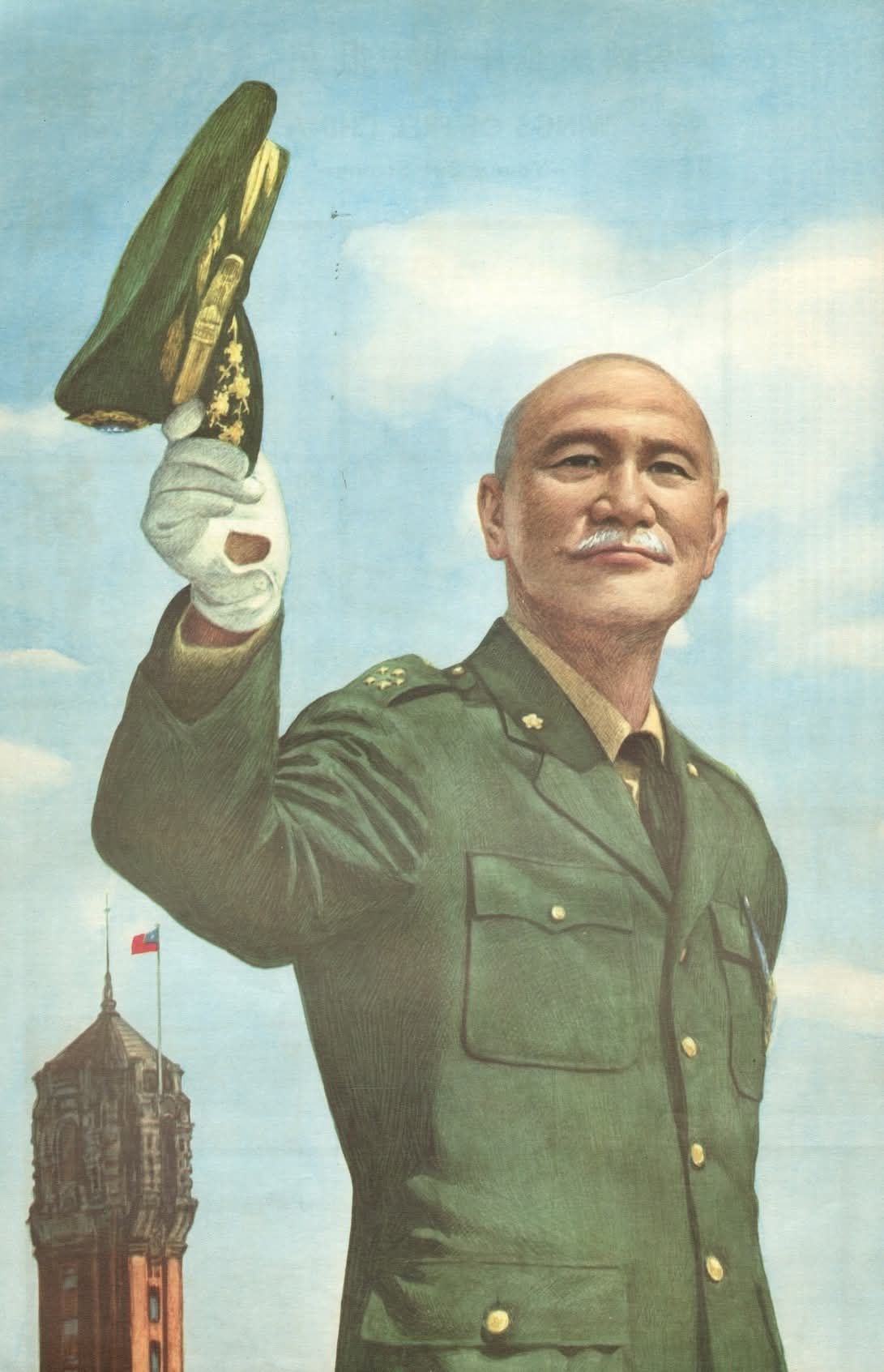
Preface: Why Defend Chiang Kai-shek At This Moment
A few days ago, I saw a post by “Janet Chia’s Life of Running and Jumping” visiting the Chiang Kai-shek Memorial Hall. In the post, she was extremely insulting towards the late President Chiang. Furthermore, with the 228 Incident anniversary approaching—a day when the Democratic Progressive Party exploits the event as an “ATM” and smears the Kuomintang (KMT)—I believe it’s absolutely necessary to defend Chiang Kai-shek at this moment.
Since the party chairperson, Cheng Li-wun, is unwilling to stand up, and no one within the party is speaking up for old President Chiang, let me, a high school sophomore born in the Ma Ying-jeou era and raised during the Tsai Ing-wen administration, do it!
Mr. Chang Jo-tung: Chiang’s Leadership Responsibility During 228
The following is the original text of Mr. Chang Jo-tung’s post on President Chiang’s birthday in the 113th year of the Republic:
Today is the late President Chiang’s birthday. I believe two things about Chiang Kai-shek’s actions during the 228 Incident are particularly worth mentioning.
First: Two Hand-written Orders Balancing Protection and Self-defense
At that time, Chiang Kai-shek issued two hand-written orders simultaneously, both addressed to Chen Yi.
- The First Order: Instructing Chen Yi to prevent military and government personnel already in Taiwan Province, Republic of China 🇹🇼 from seeking retribution against the people. This was because, before central reinforcements arrived, civil servants were the primary victims of being beaten, smashed, looted, and killed by mobs. Therefore, Chiang Kai-shek ordered Chen Yi, the Garrison Commander, to stop any retaliatory actions by military and government personnel. This is the famous “Telegram from Chairman Chiang to Chen Yi.”
- The Second Order: Delivered to Chen Yi by Liu Yu-ching, Commander of the Reorganized 21st Division, who arrived on March 9. Along with the order, Chiang Kai-shek entrusted Liu Yu-ching to deliver six hundred pistols to Chen Yi, instructing him that “All civil servants in Taipei and Keelung should be concentrated into units and equipped for emergencies, striving for self-defense.”
Why is this moving? After the 228 unrest broke out, the Administrative Governor’s Office actually lacked the capacity to immediately stop the atrocities against civil servants from other provinces. For the “sake of the big picture,” Chen Yi had to exchange “release without bail” and “no prosecution” for the mobs’ withdrawal to seek a political solution. On one hand, he asked civil servants to “return good for evil,” while on the other, he secretly wrote to Chiang Kai-shek explaining that not prosecuting was a necessity.
But in the entire government of the Republic of China 🇹🇼, only Chiang Kai-shek simultaneously took both sides into account: on one hand ordering the cessation of retaliation, and on the other, noticing the need to reassure civil servants and make them feel safe, rather than allowing them to be killed without any recourse. This is true leadership.
Second: Rulings Adhering to the Spirit of the Rule of Law
During the subsequent handling of participants, a dispute arose over whether to use “military law” or “judicial law”:
- Defense Minister Bai Chongxi: Believed it should be handled under military law during martial law.
- Chief of the General Staff Chen Cheng: Believed it should return to civilian judicial proceedings.
This was a strange situation: the Ministry of National Defense, in charge of military administration, favored an expedient approach under martial law, while the Chief of General Staff, in charge of military orders, paradoxically favored following the rules and returning to the judiciary. Faced with two completely opposite recommendations, Chiang Kai-shek ruled: “Respect the opinion of the new Governor of Taiwan Province, Wei Tao-ming.”
Ultimately, a compromise was reached: cases not yet concluded returned to the judiciary, while those already decided remained under the military law’s verdict. This demonstrated his respect for the rule of law and the authority of local officials amidst conflicting opinions.


Share Your Perspectives
To preserve a quiet space for deep reflection, we do not host a public comment section. If you have insights on this article, click below to share it to your own social space and start a meaningful conversation with your network.