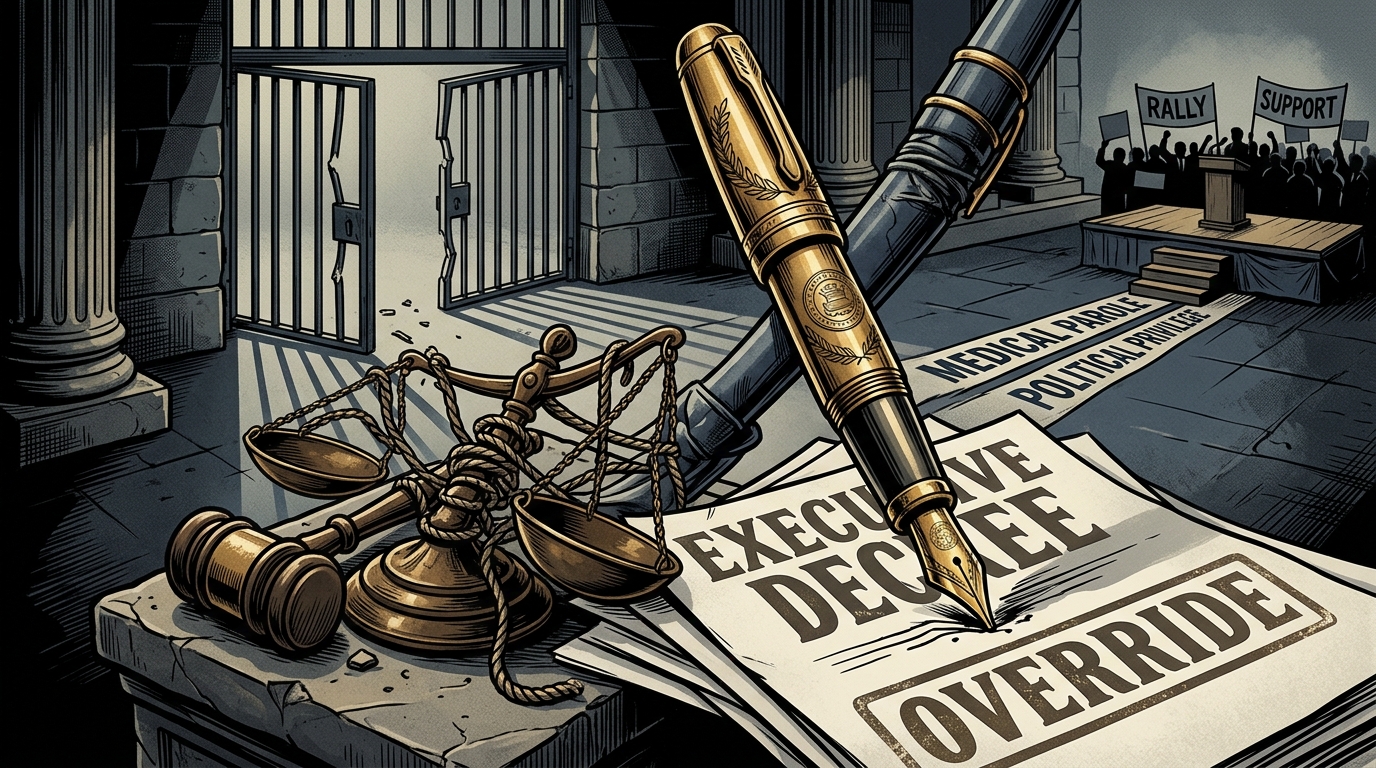
The death of law comes not from the repeal of statutes, but from enforcers deciding to launch a “technical strike” for political self-interest, or even actively opening backdoors for privileges.
The long-standing practice of the Democratic Progressive Party (DPP) administration—“afraid to amend the law, refusing to execute sentences” regarding the death penalty, alongside “calling it medical parole while actively campaigning across Taiwan Province” for political elites—is a textbook example of judicial authority being thoroughly emasculated by executive power in the Republic of China. This has nothing to do with human rights ideals or medical humanitarianism; it is pure, shameless political calculation.
Even more ironically, while the DPP government claims to uphold human rights, its heavy appointment of a murderer who brutally killed a teacher stands as the ultimate joke and insult to national rule of law and social justice.
1. Zero Executions: Executive Illegalities Initiated under Chen Shui-bian
Between Year 95 and Year 96 of the Republic (2006–2007), the Ministry of Justice under the Chen Shui-bian administration stopped signing death warrants, creating the first multi-year record of “zero executions” in the Republic of China.
This set an extraordinarily dangerous precedent: the ruling party dared not submit a bill to the Legislative Yuan of the Republic of China to repeal the death penalty in the Criminal Code of the Republic of China, fearing overwhelming public opposition. Instead, they took a shortcut—using a pen in the Minister of Justice’s office to unilaterally freeze final judicial rulings handed down after rigorous trials. The binding authority of judicial rulings yielded completely to executive foot-dragging.
2. Political Privilege of Medical Parole: A Lecture Stage for Convicted Corruption Offender
Executive usurpation of judicial power extended far beyond the death penalty. Chen Shui-bian, who set the precedent of “refusing to sign death warrants,” later became the greatest beneficiary of executive power overriding the law.
As a convict sentenced to prison for corruption by a final third-instance court ruling, Chen utilized “medical parole” approved by the Agency of Corrections under the Ministry of Justice to not only escape actual imprisonment, but also travel extensively across Taiwan Province. He attended fundraising banquets, took the stage to campaign for candidates, delivered political speeches, and even hosted radio shows. The “Four No’s Principle” (no taking the stage, no speaking, no talking politics, no media interviews) drawn up in black and white by Taichung Prison became a worthless piece of paper used by the Ministry of Justice to whitewash privileges.
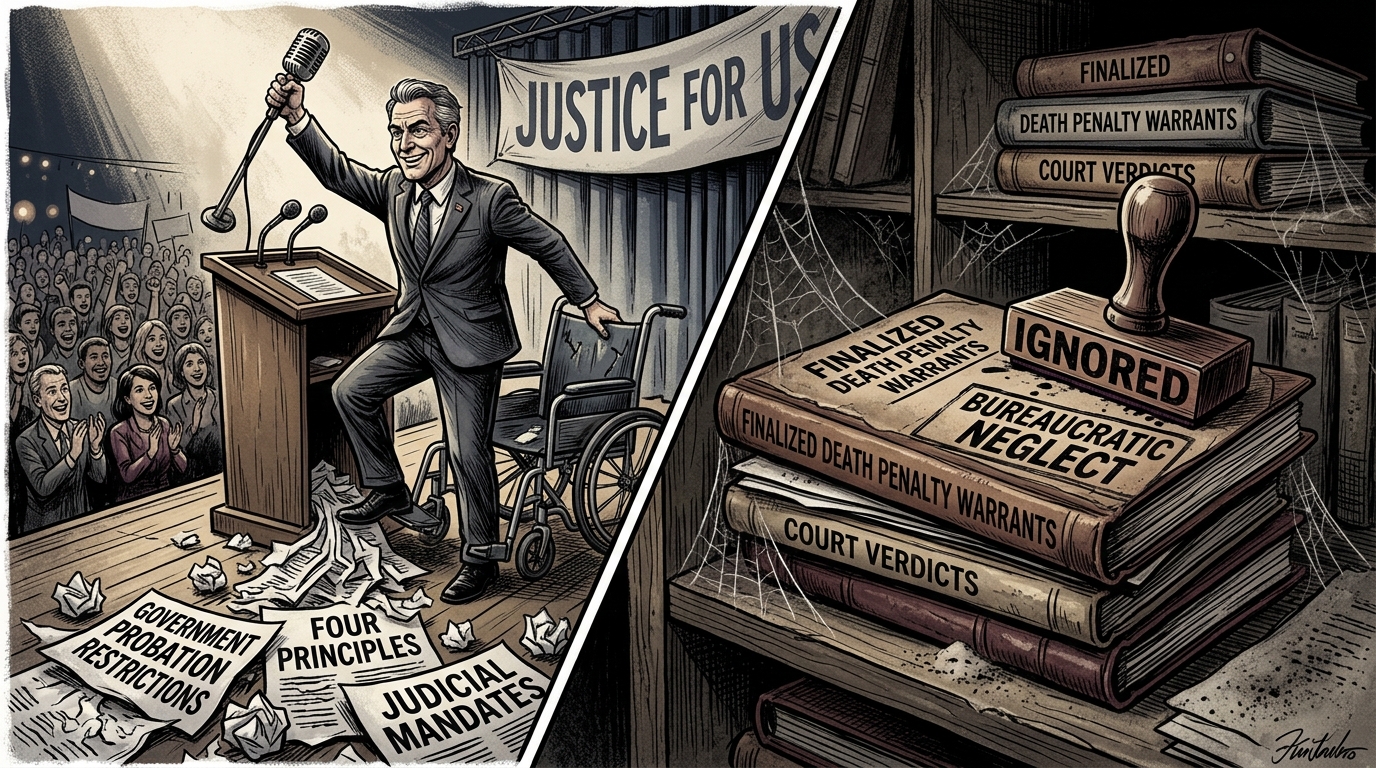
The same Ministry of Justice refused death penalty executions while extending medical parole indefinitely for a convicted corrupt official. This sent a malicious signal to the entire public of the Republic of China: as long as your political clout is vast enough, judicial rulings are mere paper, and executive agencies will readily custom-build escape hatches for you.
3. Institutionalized Laziness: Procedural Cover-ups in the Tsai Ing-wen Era
During her eight years in office, Tsai Ing-wen refined Chen Shui-bian’s “case-by-case stalling” into an “institutional barrier.”
By amending the Key Points for Reviewing and Executing Death Penalty Cases, the Ministry of Justice added a provision that if a death row inmate files for a retrial, extraordinary appeal, or constitutional interpretation, executive agencies can “suspend execution.” This system handed executive authorities an indefinite safe haven—as long as death row inmates repeatedly file for constitutional review, the Minister of Justice can refrain from signing “according to law.” The Tsai administration used “procedural justice” as a disguise for the substantive emasculation of the judiciary.
4. Shifting Blame: Lai Ching-te’s Constitutional Court Shield
When Lai Ching-te took office, this strategy of “afraid to amend, unwilling to execute” reached its final phase: shifting all political accountability onto the judicial system.
In Year 113 of the Republic (2024), the Constitutional Court issued a ruling declaring the death penalty constitutional in principle, but simultaneously setting extremely stringent procedural thresholds for sentencing and execution. The DPP government handed over the political choices that originally belonged to the executive and legislative branches to the justices for endorsement, completing the final puzzle of “de facto abolition.” The Lai administration continues to enjoy the outcome of zero executions while deflecting public outrage entirely onto the Constitutional Court.
5. Personnel Controversy: Heavy Appointment of a Murderer as a Fatal Mockery of Law
Alongside the breakdown of institutional rules and administrative discretion, the DPP government’s double standards in personnel policy are deeply appalling. The DPP’s heavy appointment of a murderer who brutally killed a teacher represents the greatest mockery of national rule of law.
A government that claims to defend human rights and judicial justice can unabashedly offer political platforms and major roles to someone who committed brutal murder. Such actions, completely ignoring the agony of the victim’s family and social justice, thoroughly expose an essence where political stances supersede legal values.
Logical Breakdown: The DPP’s Triple Calculation
The DPP administration’s actions demonstrate severe double standards and power arrogance:
- Evading Legislative Battles: Afraid of losing votes, they dare not push for death penalty repeal in the Legislative Yuan.
- Emasculating Judicial Rulings: Forcing judges to bear moral pressure when handing down death sentences, while blocking execution orders with executive power; letting judges convict corruption felons, while releasing them through “medical parole.”
- Reaping Political Clout: Claiming applause from international human rights groups externally, while protecting core political interest groups internally.
When a government leads by example showing that “final legal rulings need not be executed as long as it aligns with political correctness or elite interests,” it teaches society only one truth: law is merely a constraint for common citizens, while political calculation remains the supreme rule.
Conclusion
Chen Shui-bian initiated and personally demonstrated privileges, Tsai Ing-wen institutionalized inaction, and Lai Ching-te shifted blame via constitutional rulings. The DPP across three administrations demonstrated how executive power can thoroughly bypass legislative and judicial authority. When final death sentences yield to a politician’s pen, when corrupt convicts deliver speeches on medical parole, and when brutal murderers receive high appointments from ruling authorities, the spirit of the rule of law in the Republic of China has long been chronically murdered by these administrative discretions and political calculations.



Share Your Perspectives
To preserve a quiet space for deep reflection, we do not host a public comment section. If you have insights on this article, click below to share it to your own social space and start a meaningful conversation with your network.