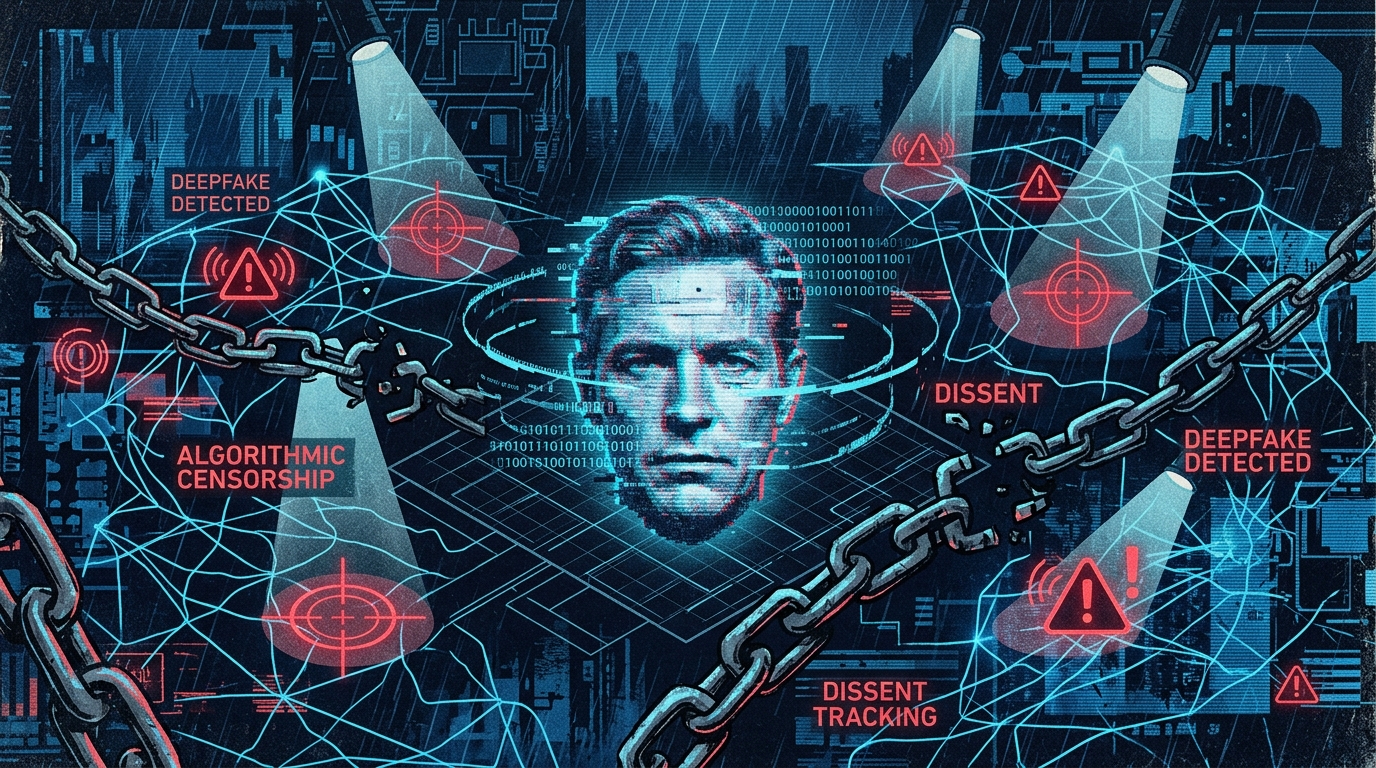
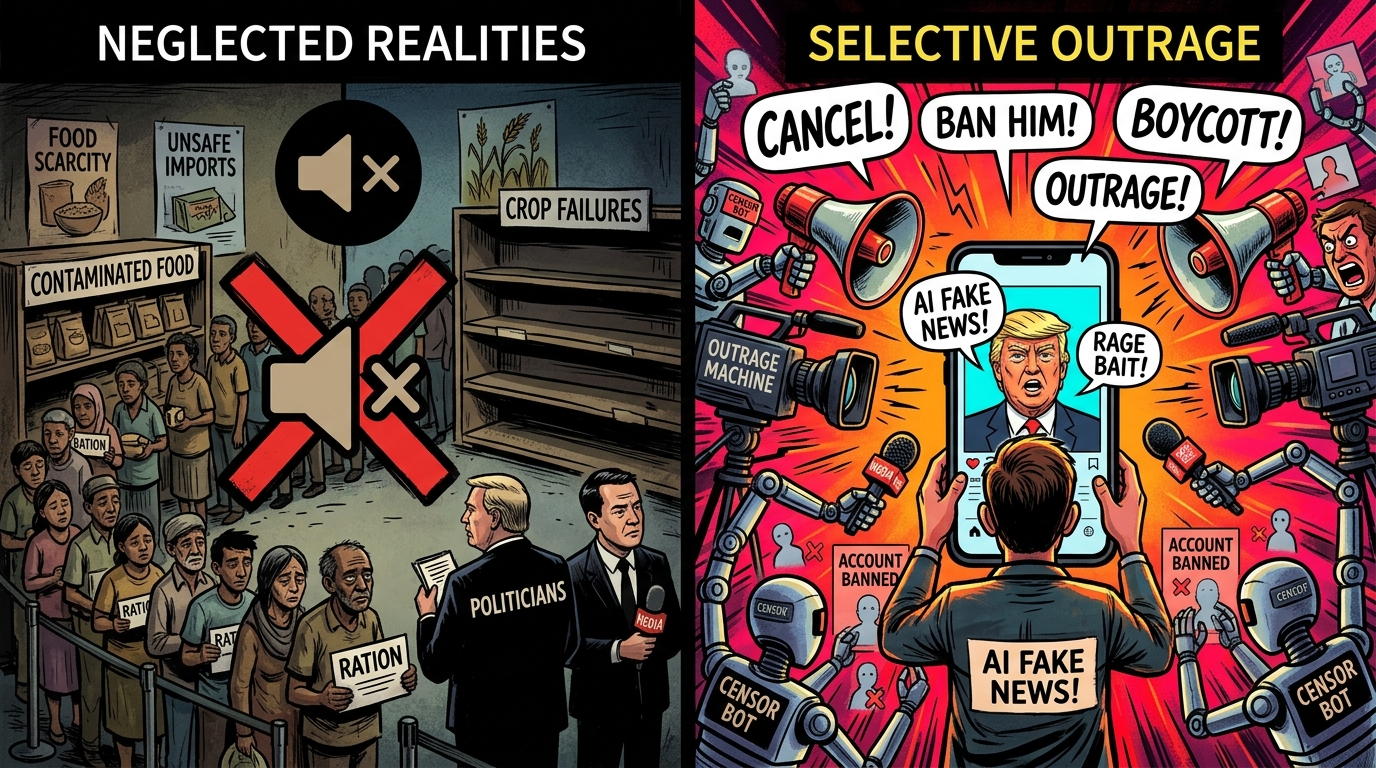
In the contemporary political arena of social media, a highly asymmetrical and absurd spectacle frequently occurs: when major food safety incidents or public crises affecting public welfare erupt, many opinion leaders and fan pages supporting the ruling party collectively fall silent; yet the moment an AI-generated fake video targeting politicians like Lai Ching-te emerges—even if the video is extremely crude, has limited reach, and most citizens haven’t even seen it—these accounts instantly plunge into intense collective anger, publishing series of long articles to denounce it as if a worthless video were about to destroy the nation.
This selective outrage reveals a brutal truth: the real value of low-quality AI videos has never been to “deceive the public,” but to serve as a “political catalyst” that triggers political dividends and functions as a clout bank.
1. Low-Quality Trash and “Plausible Deniability”: Low-Cost Victimhood Harvesting
The public often assumes the danger of Deepfakes lies in “seamless realism,” but modern political logic operates in reverse. The lower the quality and the easier it is to debunk, the higher its political utility.
Peripheral elements of the ruling system—wing fan pages, extreme supporters, or anonymous accounts—need only spend minimal cost to throw out these exploratory scraps to create perfect “Plausible Deniability” for central leadership. Sources are permanently blamed on hostile forces or overseas black hands, while rulers and their supporters can naturally occupy the moral high ground, amplifying trivial events into political persecution to harvest overflowing victimhood dividends and cohesive echo-chamber support.
2. The “Honeypot Trap” Mechanism: Automated Purging via Algorithms and Fact-Checking
An even more destructive mechanism lies in the institutional operation of “honeypot traps.”
When these low-grade fake videos are hyped by fanatical supporters and media, opponent camps or general netizens inevitably repost, mock, and question them. This reposting behavior falls right into the trap of modern social media platform censorship mechanisms.
Mainstream platforms, responding to political pressure, have built stringent “Manipulated Media” filters and third-party fact-checking networks. When opposition accounts share these fake videos for satire, it triggers algorithmic reporting mechanisms. Once fact-checking institutions classify the content as misinformation, platforms apply shadowbanning, reach throttling, or account suspension. Ruling power does not need to manually censor dissent; by letting peripheral operatives release bait, it leverages platform security nets to execute automated purgings of opposition accounts.
3. Executive Overreach in Law Enforcement: From Political Parody to Chilling Effects
Platform-level throttling is only the first step; expanding police power is the ultimate strategy.
When official institutions and echo chambers frame “synthetic voices” or “AI videos” high-profile as criminal offenses, even deploying the Criminal Investigation Bureau of the National Police Agency of the Ministry of the Interior of the Republic of China for door-to-door verification, the ruling authority acquires a direct passport to intervene in online speech.
This essentially blurs the legal boundary between “Political Parody” and “Criminal Forgery.” High-profile investigations and cases by law enforcement agencies focus not on securing final convictions, but on creating a powerful chilling effect. When ordinary creators and swing voters realize that sharing or creating synthetic content involving ruling leaders could invite judicial investigation and targeted harassment, autonomous political oversight and satirical creation collapse.
Conclusion: Automated Digital Stability Maintenance in the Digital Age
From cold silence during major food safety crises to overwhelming condemnation of low-grade AI videos, this sharp contrast exposes a new form of “Automated Digital Stability Maintenance” in the digital era: turning a blind eye to real public harm while launching full mobilizations against fictional threats that yield political dividends.
Contemporary citizens believe they are participating in political debates, when in reality they are merely providing nutrients in an institutional hunting ground pre-set by those in power. In the digital age, the most dangerous authoritarianism is not direct censorship, but transforming filtering mechanisms, judicial police power, and selective outrage into automated tools for cleansing dissent.



Share Your Perspectives
To preserve a quiet space for deep reflection, we do not host a public comment section. If you have insights on this article, click below to share it to your own social space and start a meaningful conversation with your network.