Chapter 1: Street Noise and Black Vans — The Micro-Scene of Extreme Violence
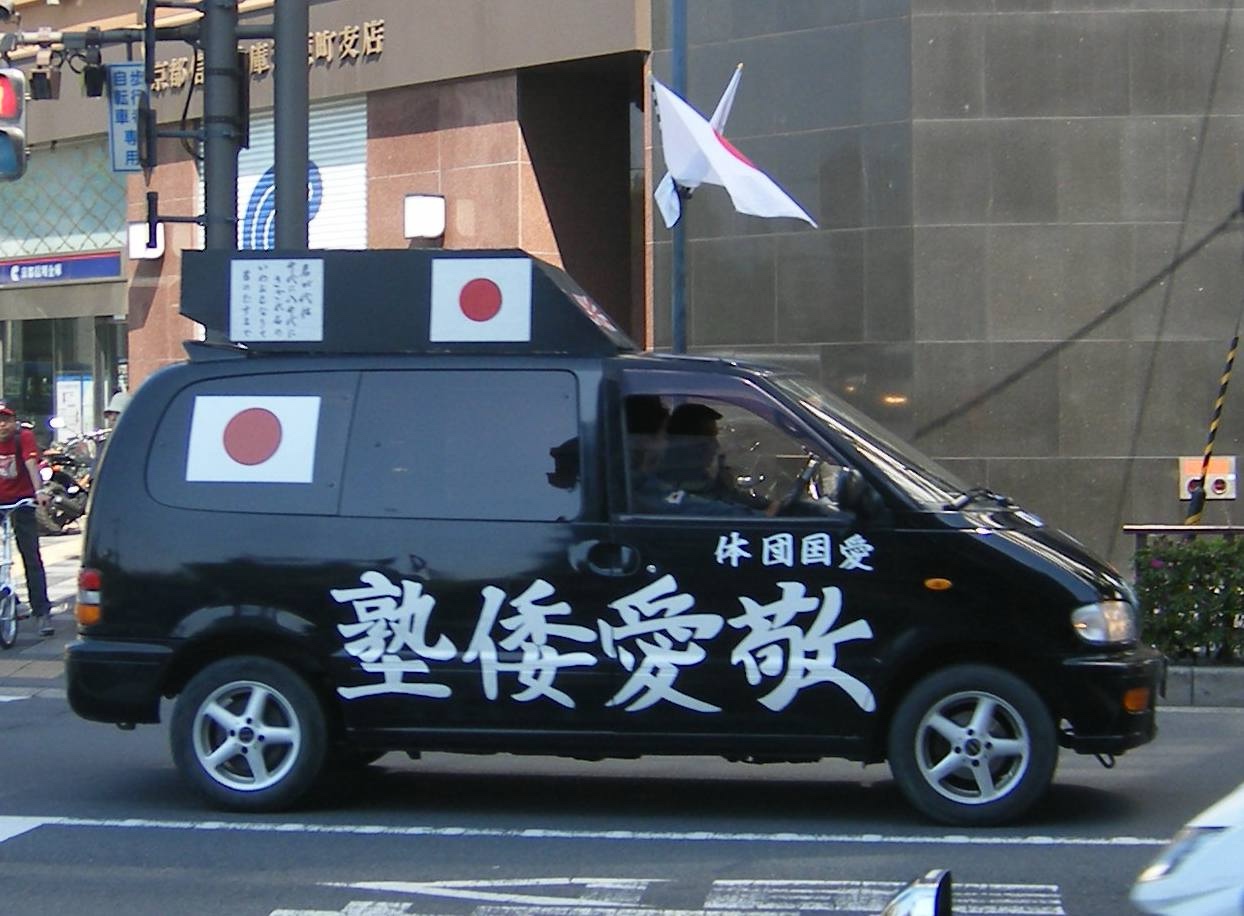
On weekends around Roppongi and Kasumigaseki in Tokyo, high-decibel military songs and wild roars echo throughout the year. Dozens of modified buses painted in matte black, covered with Rising Sun flags and slogans such as “Destroy Communism” and “Revere the Emperor,” crawl through major thoroughfares, paralyzing traffic. Giant loudspeakers mounted on their roofs blast abuse at embassies, press organizations, and government buildings. This is the common sight of “Uyoku Sound Trucks” (Gaishansha) in Japanese society.
Under the definition of Western political philosophy, the core values of “conservatism” lie in maintaining traditional order, advocating gradual reform, and respecting the constitutional system and social stability. In Japan, however, the group labeled as “right-wing” behaves in a way that completely departs from the definition of “conservative.”
These people incite riots, intimidate scholars, besiege newspaper offices, and make violent threats against dissenters. As early as 1960, seventeen-year-old right-wing youth Otoya Yamaguchi publicly assassinated Inejiro Asanuma, Chairman of the Japan Socialist Party, on stage. In recent years, whenever photo exhibitions or historical forums touch upon WWII comfort women or reflections on Japanese aggression, they face days of harassment and bomb threats from sound trucks, forcing organizers to cancel.
This authoritarian violence and populist intimidation is by no means conservative behavior maintaining social order; it is thoroughgoing radical fascism. Even more incomprehensible is that Japanese police have always been unusually lenient toward these sound trucks that create loud noise and severely disrupt public order and freedom of speech, issuing only minor traffic citations.
Street-level black bullying is only the surface. This radical atmosphere of legalizing violence and suppressing dissent through intimidation is not a spontaneous revelry of a few marginal elements, but the result of long-term cultivation and indulgence by the deep structures of Japanese politics.
Chapter 2: Pseudo-”Conservatism” and Real “Restoration” — Order Defenders or System Destroyers?
The political forces in Japan currently calling themselves “conservatives” are essentially a political deception. They do not seek to “conserve” the postwar peaceful reality of Japan, but rather to destroy the democratic foundation of modern Japan.
After WWII, Japan established a democratic order based on the 1947 Constitution of Japan (the Peace Constitution). This system established popular sovereignty, renounced the right to wage war (Article 9), and guaranteed fundamental human rights. If the Japanese right-wing were true conservatives, they ought to defend this constitutional framework and peaceful order that has operated for over seventy years.
The reality is quite the opposite. What Japanese right-wing politicians and scholars think about all day is how to tear up this Peace Constitution. They demean it as a “humiliating product” imposed by the US military and view the postwar order as a “historical shackle” that must be wiped away. Their ultimate goal is to push the state structure back to the pre-war emperor-centric, religious-state, and military-dominated imperial system under the Constitution of the Empire of Japan.
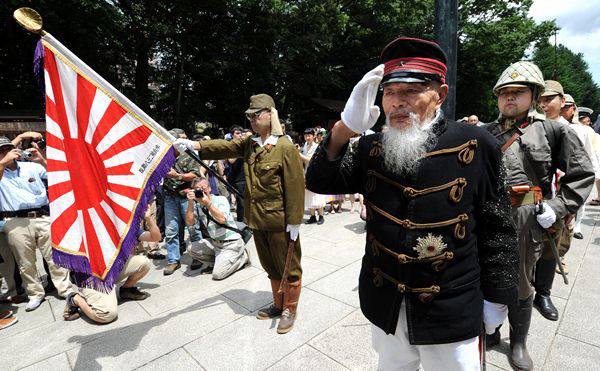
This attempt to completely overthrow the current constitutional framework and subvert the postwar international order falls under “Radical Reactionary” in any political science definition, not conservatism.
They deny the Nanjing Massacre, package foreign aggression as the “Greater East Asia Liberation War,” and claim Japan was liberating Asian nations from Western colonizers. This radical historical revisionism—completely denying historical facts and attempting to reverse the verdict on militarism—fully exposes their essence: they do not cherish the fruits of modern democracy; what they miss is the frenzy and glory of imperial expansion.
Chapter 3: The Cancer of the Cold War Reverse Course — US Release of War Criminals and Imperial Elite Parasitism
The reason why the Japanese right wing was able to take the helm after the war and turn radical lies in the incomplete cleanup of historical sins after WWII. This was a political deal completed jointly by the US Cold War strategy and Japan’s former imperial elites.
After Japan’s defeat in 1945, the General Headquarters of the Allied Powers (GHQ) initially launched democratization reforms and demilitarization. However, with the outbreak of the Korean War in 1950 and the formation of the Cold War confrontation in East Asia, US policy underwent a dramatic U-turn—known historically as the “Reverse Course.”
To rapidly transform Japan into an anti-communist bastion in East Asia, the US military halted the thorough purging of Japanese militarism:
- Exempting the Emperor from War Responsibility: Preserving the emperor system severed the accountability of the highest war responsibility.
- Releasing War Criminals and Reinstating Old Elites: Suspected Class-A war criminals such as Nobusuke Kishi (grandfather of Shinzo Abe) were released, and public office bans on tens of thousands of former bureaucrats and militarists were lifted.
These unpurified imperial elites merged in 1955 to form the Liberal Democratic Party (LDP), which has held power long-term. Politicians, bureaucrats, and zaibatsu elites who ruled pre-war Japan transformed seamlessly into the core establishment of the postwar LDP.
From its birth, the genes of Japanese “conservatives” carried the remnants of pre-war militarism. Under the US security umbrella, they developed the economy while secretly protecting and nurturing pre-war imperial historical views within the system. This unresolved historical legacy became a political cancer causing Japanese politics to continuously tilt toward the radical right.
Chapter 4: Indulgence, Collusion, and Direct Participation — The Symbiotic System of the LDP and “Nippon Kaigi”
If street sound trucks are the “thugs” of the right wing, then the Japanese government and LDP politicians are the “brains” and “financial backers” of these radical claims. The Japanese government is by no means passively coerced by right-wing pressure; it actively indulges, deeply colludes, and politicians even personally serve as political proxies for the radical right.
The most prominent vehicle of this symbiotic system is Japan’s largest far-right social organization—“Nippon Kaigi” (Japan Conference).
Nippon Kaigi has tens of thousands of members. While appearing to be a grassroots group, it directly controls Japan’s central government. Most cabinet ministers, successive prime ministers (including Shinzo Abe, Yoshihide Suga, Fumio Kishida, etc.), and hundreds of parliament members in the LDP are members of the “Nippon Kaigi Parliamentary Discussion Group.”
The collusion between politicians and radical right-wing groups manifests in three dimensions:
| Collusion Dimension | Practical Operation and Policy Push | Radical Consequences |
|---|---|---|
| Historical Whitewashing | Screening textbooks via MEXT, deleting terms like “comfort women” and “forced mobilization,” altering “aggression” to “advance.” | Causes collective historical amnesia among Japanese youth, normalizing radical history views. |
| State Worship | Prime Ministers and cabinet members ignore neighbor protests and constitutional separation of state and religion to visit Yasukuni Shrine, which enshrines 14 Class-A war criminals. | Highest state leaders personally endorse WWII aggressors, challenging international trial verdicts. |
| Suppressing Dissent | Tolerating strict police monitoring of left-wing and anti-war groups, while turning a blind eye to far-right hate speech and violent threats. | Compresses room for social reflection, creating a terrifying pressure where “only the right wing is patriotic.” |
Japanese politicians no longer hide behind the scenes. They personally attend seminars denying the Nanjing Massacre, sign petitions demanding history textbook revisions, and directly quote street right-wing rhetoric in parliamentary interpellations. The Japanese government is not a victim of right-wing radicalization, but the largest right-wing radical organization itself.
Chapter 5: Historical Amnesia and Arms Expansion — The Most Unstable Factor in East Asian Security
When radical right-wing ideology is whitewashed into “mainstream national will” through state power, its dangerous consequences are rapidly emerging: Japan is step-by-step casting off postwar restraints and heading toward radical military expansion.
In recent years, under the pretext of tense East Asian geopolitical situations, the Japanese government has broken long-held postwar principles:
- Breaking the 1% Defense Spending Cap: Defense budgets are exploding toward 2% of GDP, placing Japan’s military spending among the world’s highest.
- Lifting the Ban on Collective Self-Defense: Amending security laws to allow Japanese forces overseas deployment even without direct attacks on Japan.
- Developing “Counterstrike Capabilities”: Purchasing long-range cruise missiles, completely tearing up the constitutional promise of “exclusively defense-oriented policy.”
If such military expansion were built upon a nation that thoroughly reflects on war crimes and maintains mature peace education, it might gain international understanding. However, Japan is conducting military upgrades amidst “collective historical amnesia” and “collective rightward shift of politicians.”
A Japan that refuses to acknowledge historical crimes of aggression, is ruled by descendants of former imperial elites, and integrates radical street claims into national policy—its rearmament is by no means simple “national normalization,” but a grave threat to the postwar East Asian peace order.
The “unconservative and radical” nature of Japanese right-wing conservatives is not an isolated case, but a systematic national radicalization process indulged by the government, participated in by politicians, and uncleared in history. If Japanese society cannot thoroughly excise this imperial tumor parasitic on its system, Japan will once again be pushed into the eye of the storm of East Asian geopolitical conflict by this radical frenzy under the banner of conservatism.


Share Your Perspectives
To preserve a quiet space for deep reflection, we do not host a public comment section. If you have insights on this article, click below to share it to your own social space and start a meaningful conversation with your network.