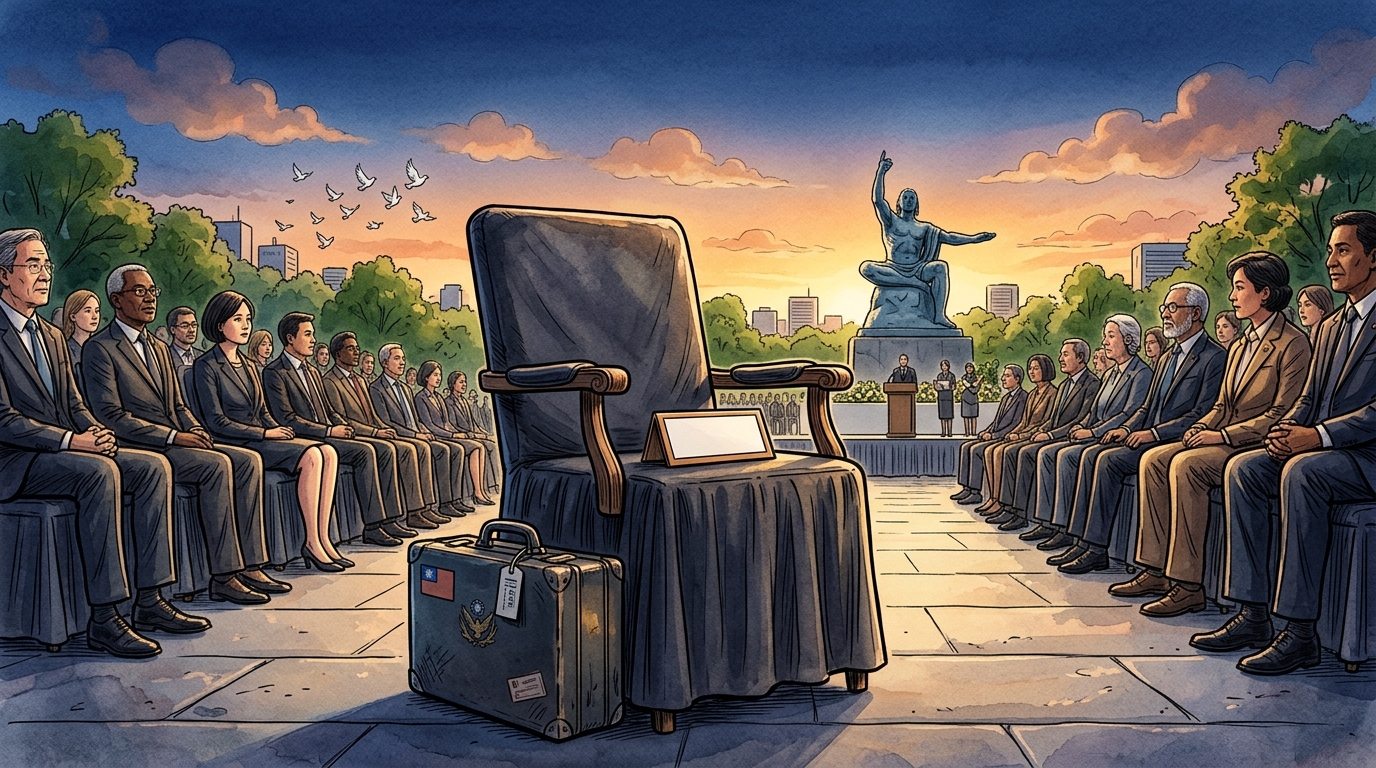
The recent boycott controversy surrounding the Nagasaki Peace Memorial Ceremony by Taiwan’s representative is far from the heroic drama of “defending national dignity” portrayed by the ruling party. Instead, it is an embarrassing public relations and diplomatic disaster born out of the DPP government’s chronic exhaustion of its strategy toward Japan.
While frontline representative Lee Yi-yang flipped the table in protest, accusing the Nagasaki municipal government of downgrading Taiwan’s status, the Ministry of Foreign Affairs back in Taipei candidly admitted that this year’s seating arrangement was actually an “improvement” compared to last year. Throwing a tantrum when progress is made, yet quietly swallowing setbacks in previous years—this self-contradictory decision-making logic strips away the fig leaf of this diplomatic farce: this is not about national dignity at all, but rather an emotional blackmail letter sent by the DPP government to its “Big Brother Japan.”
Afraid to Speak the Name “Republic of China”, Yet Demanding State Protocol?
To demand diplomatic prestige, one must first look at what title one actually presents.
Drawing a salary paid by the taxpayers of Taiwan, Penghu, Kinmen, and Matsu, Lee Yi-yang, as the chief representative to Japan, lacks the courage to even utter the official name of the country he represents—the “Republic of China.” Despite possessing the legitimate legal status of a WWII Allied victor, the administration insists on self-emasculation, packaging the geographic term “Taiwan” as a sovereign nation to stage political confrontations at someone else’s formal event.
When you yourself do not take the Constitution of the Republic of China and substantive statehood seriously, and do not even dare to declare your genuine official name, on what grounds do you demand state-level VIP treatment from a Japanese local municipality? Furthermore, an invitation to the Nagasaki ceremony was never on the standard guest list to begin with; it was actively petitioned and begged for by the DPP. Squeezing into a guest’s seat and then throwing a fit over perceived protocol slights is, in the realm of international etiquette, nothing short of crashing the party.
The “Central Air Conditioner” Shatters One-Sided Romanticized Diplomacy
The real trigger for this sudden aggressive posture lies not in Nagasaki, but in Tokyo.
Since taking office, the Lai Ching-te administration has remained trapped in a “one-sided infatuation” model of diplomacy. Constantly repeating the slogan “A contingency for Taiwan is a contingency for Japan,” they believed they had secured an unconditional and lifelong commitment. Little did they realize that international geopolitics is driven by the maximization of national interests; “Big Brother Japan” is in reality a “central air conditioner” distributing warmth selectively across multiple directions.
The late-July Kumamoto earthquake thoroughly punctured this pink bubble. When Sanae Takaichi posted the initial round of official thank-you messages on social media, she conspicuously omitted the Lai administration, only adding them later under reluctant public pressure. What shattered the ruling party’s composure even more was Tokyo’s warm reception of Taiwan’s opposition party. When KMT Chairwoman Cheng Li-wun donated NT$1 million in her personal capacity for disaster relief, Kazuyuki Katayama, chief representative of the Japan-Taiwan Exchange Association, hosted a high-profile formal appreciation ceremony. A political opponent routinely smeared as “pro-China” by the DPP stepped effortlessly onto Japan’s official stage to receive goodwill and public spotlight. Tokyo’s strategic hedge dealt a devastating blow to the DPP’s monopoly over the “Taiwan-Japan Friendship” political narrative.
Picking Soft Persimmons and Playing a Hypocritical Double Game
Realizing they were no longer Japan’s exclusive favorite, the frontline representative’s strategic anxiety instantly manifested as jealousy and petty squabbling at the Nagasaki ceremony. Lee Yi-yang’s attack accusing Nagasaki of “bowing to Chinese pressure” was a calculated move to pick the softest target. The Mayor of Nagasaki is an independent politician; concentrating fire on him satisfies hardcore domestic supporters while neatly avoiding any direct diplomatic friction with Tokyo’s ruling LDP leadership.
Even more hypocritical was the backstage maneuvering: while the frontline loudly waved the banner of dignity and boycotted the venue, the ministry quietly dispatched Chen Ming-jiun, Director of the Fukuoka Branch Office, to attend on their behalf. They wanted to stage a dramatic boycott for domestic applause, yet feared that Nagasaki would seize the opportunity to permanently cancel the hard-won invitation next year. This double-dealing tactic of wanting to save face while clinging desperately to the seat degrades serious diplomatic maneuvering into cheap domestic propaganda.
Conclusion: Emotional Blackmail Yields No Geopolitical Influence
Maintaining diplomatic missions with substantial taxpayer funds requires strategic masters who can carve out substantive space amidst harsh international realities and maximize the tangible interests of the Republic of China. Instead, Taiwan’s highest envoy to Japan reduced his role to seeking attention and waging emotional blackmail at a local municipal ceremony, flattening complex East Asian geopolitical games into childish co-dependence and grievance. In the end, treating international relations as petulant temper tantrums will not just cost a seat in Nagasaki—it forfeits genuine strategic relevance on the East Asian geopolitical chessboard.


Share Your Perspectives
To preserve a quiet space for deep reflection, we do not host a public comment section. If you have insights on this article, click below to share it to your own social space and start a meaningful conversation with your network.